Zombie Catchers : Hunt & sell
- 4.6
- Rating
- 100.00M
- Installs
- Free
- Price
 Analysis by App-foxy
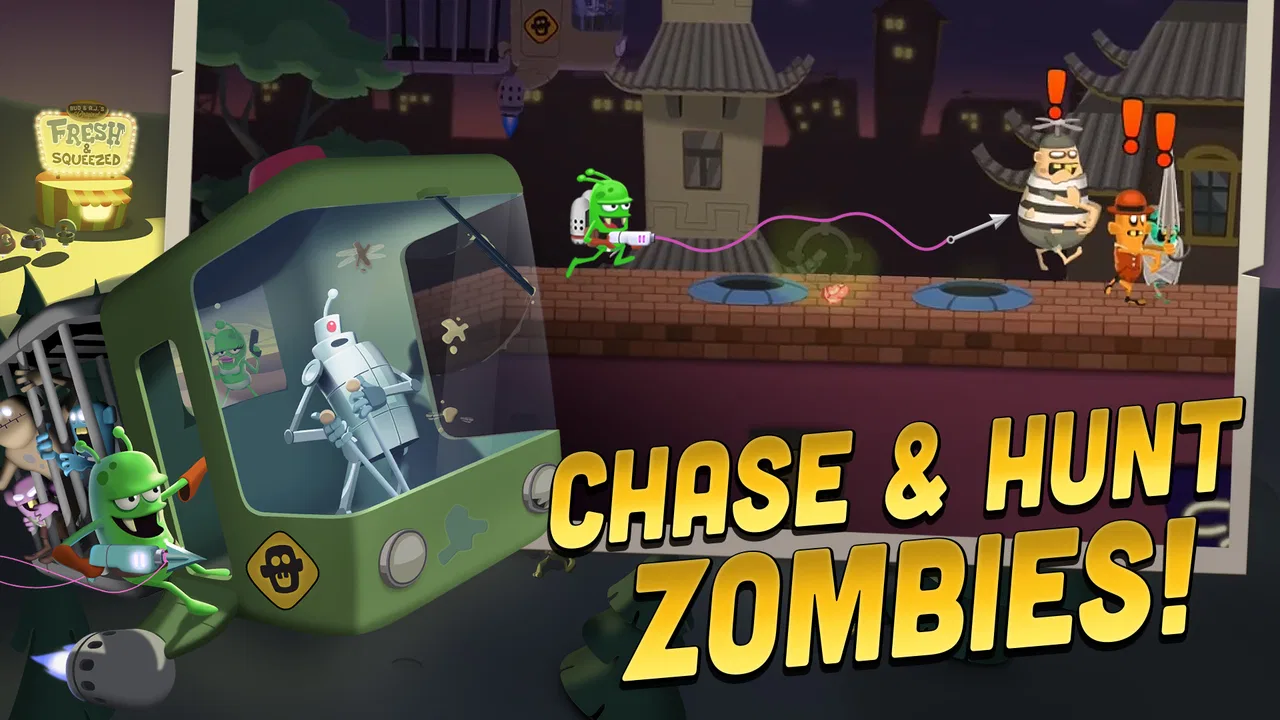
I spent time with Zombie Catchers: Hunt & sell as a light action game, and its central idea is immediately easy to understand: chase zombies, capture them, and turn the results into a small business. That combination gives it a different rhythm from a straightforward shooter. You are not only clearing undead enemies; you are also deciding how to use what each hunt produces.
That mix is the reason I kept coming back. A short session can feel productive because it usually has a clear purpose, while a longer session gives room to improve your operation and try more ambitious hunts. It is playful rather than frightening, so I would describe it as cartoon action with a zombie theme instead of horror. If you want intense survival tension, this is probably too cheerful. If you want an approachable game that combines chasing, collecting, crafting, and upgrading, it has a lot more going for it than its simple premise suggests.
What the game actually offers on a normal session
The basic loop is built around tracking down zombies and bringing them in rather than simply defeating everything on screen. That distinction changes how I play. I pay attention to positioning, timing, and the tools available for a particular target. The hunt feels more satisfying when I treat it as a small capture job instead of rushing through every encounter.
You May Also Like

 Pandora - Music & Podcasts
Pandora’s Music Is Easy to Start, but Harder to Recover
Pandora’s strength is its low-effort path from a seed to a station. Its weak spot is how much confidence it asks you to place in connection, setup, and quiet recovery.

 8 Ball Pool
 Is Built on Rivalries, Rematches, and Routine
A close look at the rivalries, rematches, shared routines, and unanswered safety questions that turn a quick pool match into a persistent mobile community.

 Samsung Music
’s Quiet Strength Is Playing What You Already Own
Its reach comes less from spectacle than from dependable access to a personal library. That simplicity is both the app’s strongest retention engine and its ceiling.

 AccuWeather: Weather Radar
AccuWeather Review: A Quick, Clear Forecast for Everyday Decisions
For everyday plans, the best forecast is the one you can understand quickly. AccuWeather makes rain timing, radar, and local conditions easy to act on, with a few trade-offs.

 Hill Climb Racing
Why Hill Climb Racing Still Turns Crashes Into One More Run
A tiny car, a bumpy hill and one more upgrade: Hill Climb Racing keeps resurfacing because its simple chaos makes every near-miss feel personal.

 AliExpress - Shopping App
AliExpress Makes Global Shopping Feel Personal, but Shoppers Bear the Risk
AliExpress turns a global marketplace into a pocket-sized discovery engine. Its reach is useful, its shopping loop compelling, and its trade-offs easy to miss.
More From Our News Desk
View All News


After a hunt, the captured undead become part of the game's production cycle. The title's juice-making idea is not just a joke in the description; it gives the action a practical reason. I am working toward something, and that makes repeated missions feel less empty than they might in an arcade game where every round ends with only a score.
The business layer also gives the game a gentle sense of progression. I can think about which improvements will make the next outing easier or more rewarding, rather than spending every session on disconnected stages. That is especially useful on a phone, where I may only have a few minutes and still want to make visible progress.
How the free model affects the value
The game is free to download and play, which makes trying it a low-risk decision. Its listed age rating is Everyone, so the presentation is aimed at a broad audience rather than a mature horror crowd. The developer is Deca Games, and the title is available on Android devices running at least version 7.0 of the operating system.
There are optional in-app purchases, with individual items ranging from $0.49 to $49.99. I see that as the most important cost detail for a potential player: access itself does not require an upfront payment, but the store can offer purchases at very different levels. The free entry point is therefore genuine in the practical sense, while the overall value depends on whether you are comfortable progressing without buying extras.
I would not treat the highest-priced item as a reason to avoid the game automatically, because the existence of an optional purchase does not tell me how necessary it is during ordinary play. What it does tell me is that players who dislike prominent monetization should approach carefully. I would begin without spending anything, learn how the progression feels, and only consider a purchase if it solves a specific annoyance rather than responding to a temporary temptation.
That approach matters here because the game's appeal is tied to its repeating loop. If you enjoy the loop on its own, the free version can offer meaningful entertainment. If you only enjoy it when progress is accelerated, the purchase system may change your experience from relaxed action into pressure to spend. For me, the sensible value test is simple: play long enough to decide whether capturing and processing zombies is fun before assigning any monetary value to faster progress.
Where the value comes from beyond the zombie theme
The strongest value is variety within a compact idea. Many action games give me one question—how do I defeat the next group? Here, I also think about how a target fits into the wider operation. That extra layer makes the same basic action feel more purposeful and gives me a reason to notice the economy instead of treating it as decoration.
A useful habit is to avoid spending every reward immediately. I get more from the game when I look at the next meaningful improvement and save toward it, rather than making small purchases simply because I can. This turns the progression into a planning exercise. It is a modest strategy, but it helps prevent the middle of the game from feeling like a string of random taps.
I also find that the game suits alternating attention. I can focus closely during a hunt, then switch to a calmer management decision afterward. That makes it a good fit for a commute, a waiting room, or a short break when I want more interaction than a passive video but less commitment than a console action game.
Another non-obvious strength is the way the business premise softens repetition. Repeating a familiar action is easier to tolerate when the outcome feeds a visible purpose. The game does not need every encounter to be completely new because the capture, crafting, and selling cycle gives repeated work a different context. Players who enjoy incremental improvement may appreciate that more than players who need constant mechanical reinvention.
Its broad presentation also expands its usefulness as a shared casual game. The cartoon tone and Everyone rating make it less awkward to recommend to a younger player or to someone who avoids graphic zombie entertainment. I still would not assume every child will understand the purchase system without supervision, but the theme itself is much less aggressive than the word “zombies” might suggest.
Tradeoffs that become clearer after playing
The same loop that makes the game accessible can eventually feel repetitive. Hunting, processing, and improving are satisfying when I am working toward a fresh objective, but the structure relies on me enjoying incremental change. If I want a tightly written campaign, complex tactical combat, or a constantly evolving multiplayer battle, this is not the right substitute.
The business layer can also make the pacing feel less direct. In a conventional action game, success often leads straight to the next challenge. Here, I may spend time considering resources and upgrades before returning to the field. I like that pause, but a player who wants uninterrupted action may see it as friction rather than depth.
Monetization is another tradeoff. Because purchases can be made per item, I would keep an eye on how often the game presents them and whether they affect my sense of progress. The safest way to preserve its free value is to decide on a personal spending rule before playing. For example, I would either remain fully free-to-play or set a firm limit and avoid buying simply to remove a moment of impatience.
The game is also not ideal for someone looking for realistic survival horror. Its appeal comes from exaggerated action, humor, and the oddity of turning captured enemies into a product. That tone is a feature for casual players, but it removes the dread, scarcity, and emotional weight that define more serious zombie games.
Another limitation is that the experience asks me to accept its own progression pace. I cannot compare it directly with a premium game that delivers all content through one upfront payment, because the cost structure is different. A paid alternative may offer a cleaner experience for someone who wants no optional purchases, while this free game offers an easier first step and the chance to decide later whether it deserves spending.
Small strategies that make the loop more enjoyable
I get better results when I treat each outing as a planned errand. Before starting, I think about whether I am hunting for immediate resources, trying to unlock a useful improvement, or simply playing for a few minutes. That small decision prevents the session from becoming aimless and helps me judge whether the game is actually moving at a satisfying pace.
I also recommend learning the capture rhythm instead of relying on frantic movement. The action is more manageable when I watch what the target is doing and choose the right moment to commit. This is a practical difference between playing the game as a button-mashing shooter and playing it as a capture-focused action title.
When the game gives me a choice between a quick reward and a longer-term improvement, I usually favor the option that changes future hunts. A lasting improvement can make several later sessions smoother, while a small immediate gain may disappear into the next expense. That is not a universal rule, but it is a useful way to protect the free-to-play experience from feeling like constant short-term spending.
For a short everyday session, I would play one or two hunts, process the results, and stop at a natural upgrade point. That routine keeps the game from becoming an endless grind and makes each return feel deliberate. For a longer session, I would alternate action with management rather than repeating hunts without checking what the rewards are doing for me.
I would also keep expectations realistic about the value of purchases. A paid item may be worthwhile if it supports a game I already enjoy, but it cannot fix a mismatch between the game's style and my preferences. If I dislike cartoon action, collection loops, or gradual progression, spending more will not turn this into a different genre.
Who will get the most from it
This is a strong match for players who like casual action with a light management layer. It works especially well for someone who enjoys collecting resources, making incremental improvements, and returning to a familiar map or routine with a clearer goal. The free download makes it easy to test that fit without committing money at the start.
I would recommend it to a friend who wants something more involved than a simple reflex game but less demanding than a deep role-playing or strategy title. The capture-and-sell concept gives enough structure to make progress feel meaningful, while the cartoon presentation keeps the mood relaxed. It is also a reasonable choice for families who want an Everyone-rated action game, provided an adult handles purchase expectations where needed.
It is less suitable for players who want a one-time purchase with no store prompts, a serious horror atmosphere, or highly competitive action. I would also skip it if I knew I was impatient with repeated resource loops. In that case, a premium action game may provide better value even if its initial price is higher, because the experience may feel more focused and predictable.
The game's popularity suggests that its accessible formula has found a large audience: it holds a 4.6 average from around 2.4 million ratings and has passed 100 million installs. Those figures do not replace personal testing, but they do indicate that this is not an obscure experiment with a tiny player base. It is an established mobile action option with enough reach to be easy to discover and discuss.
Device expectations and where it fits among alternatives
On the software side, the current version is 1.65.26, and the minimum operating system is Android 7.0. That makes it relevant to many Android users who are not running the newest phones, although the practical experience can still vary with hardware and background load. I would keep the game updated through the normal store process so that the installed version matches the current release.
Compared with a standard endless shooter, this game gives me more reason to care about what happens after the encounter. Compared with a management game, it asks me to participate directly in the action rather than only arranging menus. That middle ground is its clearest identity. It is not trying to replace a pure shooter or a full business simulator; it combines enough of both to create a distinct casual loop.
Compared with premium mobile action games, its free access is the main advantage, while optional purchases and a more gradual progression model are the main compromises. Compared with large competitive games, it is easier to approach and less dependent on proving skill against other players, but it may feel less exciting to someone who needs constant competition.
That comparison also explains why I would not call it universally better than its alternatives. The right choice depends on what I value more: immediate access and a playful progression loop, or a cleaner paid structure and more concentrated action. This title earns its place when the combination itself sounds appealing, not merely because it has zombies.
My buy-or-skip verdict
I would start with the free version and give it a fair trial. The central loop is clear, the cartoon action is approachable, and the capture-to-production idea gives ordinary hunts a useful purpose. For me, the best value comes from playing patiently, choosing upgrades carefully, and refusing to confuse optional purchases with required progress.
I would spend only if I had already confirmed that the game fits my habits and I wanted to support or speed up a particular part of the experience. Since individual purchases span from $0.49 to $49.99, I would be especially deliberate about the upper end rather than treating every offer as a small impulse buy. Free access is the safest recommendation; paid value should be judged by the enjoyment I am already receiving, not by promises of making the game enjoyable later.
My final view is positive but specific. Zombie Catchers is worth trying for casual players who want action with a quirky resource-and-business loop, not for anyone seeking pure horror or a fully premium experience. Deca Games has built a game that understands the usefulness of short sessions: hunt, process, improve, and return when I have time. If that rhythm sounds satisfying, the free entry point makes the decision easy. If it sounds repetitive or too dependent on gradual progress, I would skip the download and choose a more focused alternative instead.
FAQs for Zombie Catchers : Hunt & sell
01What is the main objective of Zombie Catchers: Hunt & Sell?
Zombie Catchers: Hunt & Sell is an action-adventure game where players aim to capture zombies to make delicious juices and expand their business empire. The game combines strategy with humor, as you hunt down zombies using various gadgets and expand your culinary offerings. The objective is not only to catch zombies but also to grow your business.
02Is Zombie Catchers: Hunt & Sell free to play?
Yes, Zombie Catchers: Hunt & Sell is free to download and play on both Android and iOS devices. However, it does offer in-app purchases that can enhance gameplay, such as buying additional gadgets or speeding up processes. Players can enjoy the core experience without spending money, though certain features may be more accessible with purchases.
03What are the system requirements for Zombie Catchers: Hunt & Sell?
For Android devices, Zombie Catchers requires version 4.1 and up, while iOS devices need iOS version 10.0 or later. The game is designed to be lightweight, but having a device with decent processing power and memory ensures smoother gameplay. It's advisable to have a stable internet connection for updates and in-app purchases.
04Are there any multiplayer features in Zombie Catchers: Hunt & Sell?
Zombie Catchers is primarily a single-player game focused on capturing zombies and expanding your business. While it doesn't offer direct multiplayer features, players can compete on global leaderboards to see how they rank against others worldwide. Regular updates might bring new features, so keep an eye out for any multiplayer additions.
05How does the game handle updates and new content?
The developers of Zombie Catchers regularly release updates to add new content, fix bugs, and improve gameplay. Players can expect new missions, gadgets, and zombies to be introduced over time, keeping the experience fresh and engaging. Make sure to enable automatic updates on your device to receive the latest content seamlessly.
Pros
- Engaging gameplay with strategic elements.
- Visually appealing graphics and animations.
- Frequent updates with new content.
- Intuitive controls for smooth gameplay.
- Creative concept of hunting and selling zombies.
Cons
- Requires internet connection to play.
- Can become repetitive over time.
- In-app purchases can be pricey.
- Energy system limits playtime.
- Ads can interrupt gameplay.

Zombie Catchers : Hunt & sell
Gallery